



Designing a successful school goes far beyond creating a building. Today’s Pre-K–12 campuses must support learning, foster community, enhance safety, and adapt to evolving educational needs, all while navigating complex site, environmental, and infrastructure challenges.
With experience supporting more than 1,000 Pre-K–12th grade education projects, Nitsch partners with the design team, school districts, and communities to create campuses where students can thrive. We understand that every school project is unique, and we work collaboratively with project teams to balance competing priorities, solve complex challenges, and keep projects moving forward.
While each project is unique, Pre-K–12 campus projects can face common challenges. Through thoughtful planning, strong collaboration, and multidisciplinary expertise, Nitsch helps project teams achieve successful outcomes, including:
- Designing complex utility relocations
- Supporting phased construction on active campuses
- Protecting natural and environmental resources
- Addressing traffic circulation, access, and student safety
- Supporting renovations and additions to modernize campuses
Read on to learn more about how Nitsch helps address each of these issues, with examples from our decades of experience working on Massachusetts School Building Authority (MSBA) projects.
Designing complex utility relocations
Designing utility infrastructure is often a puzzle, as we determine how the many different pieces should fit together. This is particularly true on urban building projects: rights-of-way may be congested with aging mains, utility records may be incomplete or inaccurate, staging room is limited, and neighboring properties depend on uninterrupted service.
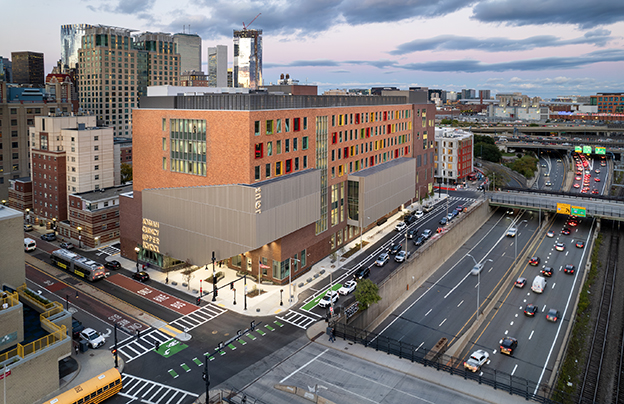
At the Josiah Quincy Upper School in Boston’s Chinatown, Nitsch designed the relocation of a 24-inch Boston Water and Sewer Commission (BWSC) sewer main out of the site and into the public right-of-way, creating space for the new building foundation. To protect the project schedule, we issued this as an early-release bid package.
Supporting phased construction on active campuses
Improving a school campus often means construction must happen while students, faculty, and staff continue to use the site every day. Supporting phased construction on an active campus requires careful planning and close coordination to maintain safe, accessible, and functional learning environments throughout the project. With thoughtful planning and a collaborative approach, these challenges can become opportunities to enhance the campus while minimizing disruption to the school community.
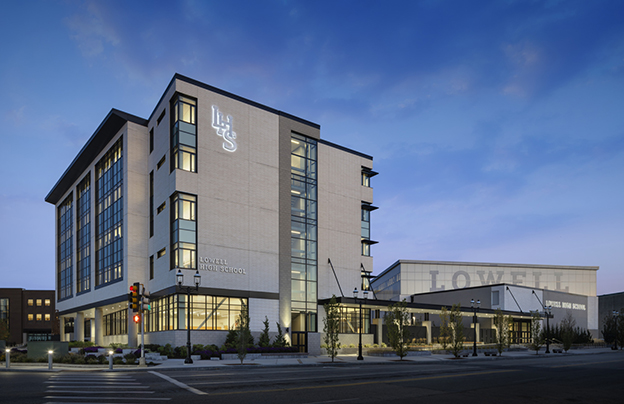
At Lowell High School, improvements were broken into four phases to allow students to remain on campus during construction. Nitsch designed temporary utility connections and stormwater management systems that would support each stage of the project, from the initial construction of the new gymnasium through each subsequent addition and renovation.
Protecting natural and environmental resources
Protecting natural and environmental resources is a critical consideration for every project, including schools. As districts and communities prioritize sustainability, resilience, and decarbonization, project teams must balance environmental stewardship with the operational needs of modern educational facilities. From protecting sensitive resource areas and addressing floodplain constraints to incorporating geothermal systems and sustainable stormwater solutions, thoughtful site design can help schools better serve their communities for years to come.
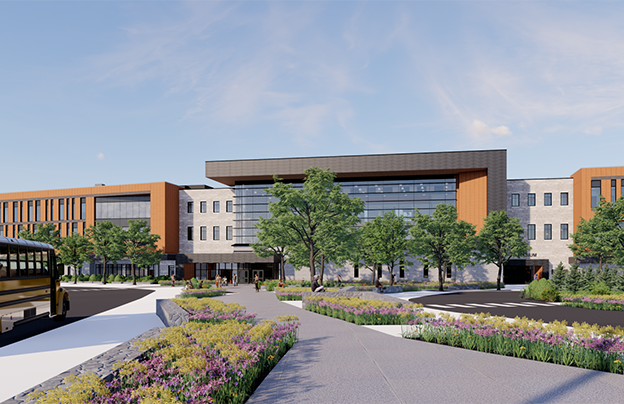
At Diman Regional Vocational Technical High School in Fall River, Nitsch helped the project team navigate complex environmental constraints while advancing the project’s sustainability objectives. We designed a comprehensive stormwater management system that considered the on-site wetlands and Outstanding Resource Water (ORW) area, improving water quality, reducing runoff, protecting drinking water, and supporting a more resilient campus for future generations.
Addressing traffic circulation, access, and student safety
Transportation and traffic planning play a critical role in every school project, from site selection through design and construction. For Pre-K–12 campuses, safe and efficient circulation affects everything from daily operations to the overall experience of students, families, staff, and neighbors. Thoughtful planning helps project teams create safer arrivals and departures, reduce congestion, and support positive connections between schools and their surrounding communities.
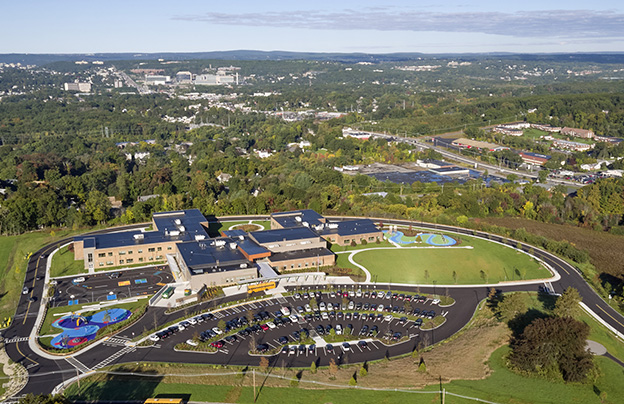
At Beal Elementary School in Shrewsbury, Nitsch worked closely with the project team to design a circulation system that prioritized safety and efficiency for students, families, and staff. By creating separate routes for buses and parent vehicles, providing adequate queuing space, and improving traffic flow throughout the site, we helped support safer pick-up and drop-off operations, reduce congestion, and enhance the day-to-day experience for the school community.
Supporting renovations and additions to modernize campuses
Renovations and additions play an important role in helping schools meet today’s educational needs while preserving the character and history that make each campus unique. These projects often require teams to work within existing site constraints, aging infrastructure, and complex regulatory requirements. Success starts with understanding those challenges early and working collaboratively to identify practical, effective solutions.
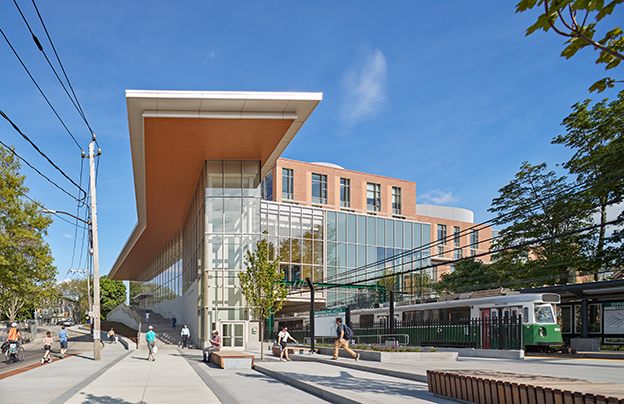
At Brookline High School, the expansion project included renovations to two existing buildings, a major addition, and a new building. Nitsch worked closely with the project team and the Department of Public Works to coordinate site improvements, clarify permitting requirements, and support a smooth path through design and approvals.
What should you look for in a school project partner?
Every successful school project starts with a team that understands both the opportunities and the challenges ahead. From early planning through construction, Nitsch works alongside architects, school districts, owners’ project managers, and fellow consultants to turn complex site and infrastructure challenges into opportunities. We help design resilient, high-performing school sites that improve safety, support day-to-day operations, and create meaningful connections between schools and the communities they serve.
For more information on how we can help your team navigate the path forward, reach out to Vice President & Director of Civil Engineering Deborah Danik, PE, LEED AP!