
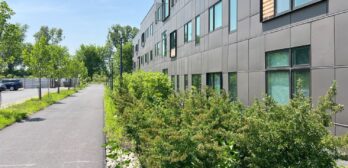
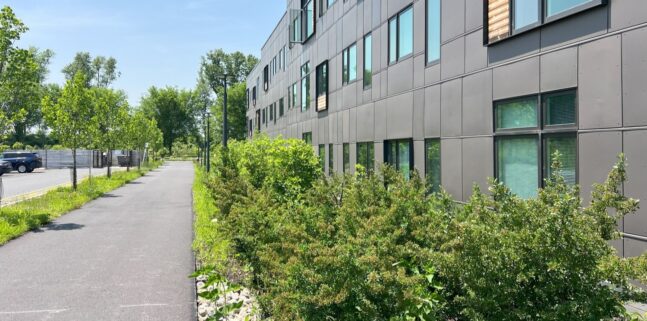
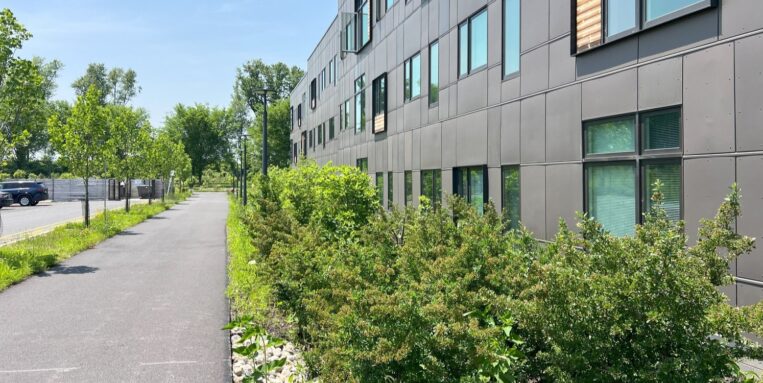
Higher education has been a core part of Nitsch’s practice since our founding, and over the years we’ve come to know our college and university partners as more than clients. Colleges and universities across the Northeast and Mid-Atlantic have trusted us with everything from a single accessibility upgrade to a campus-wide master plan, always in service of the same goal: a campus that respects its history and landscape while still welcoming students, staff, and visitors, and giving them a place to grow and thrive.
Some of these partnerships have grown especially deep over time, and we wanted to share a bit about what we’ve learned from working alongside them.
Building a Legacy Together
Nitsch has worked with Princeton University (Princeton), University of Virginia (UVA), Massachusetts Institute of Technology (MIT), Harvard University (Harvard), and Boston University (BU) on dozens of projects, building relationships that stand the test of time – some spanning more than two decades. A stormwater management planning study or site resilience design leads to another project, then another, as our team gets to know a campus’s infrastructure, regulatory environment, and priorities well enough to keep helping it grow. On these five campuses, our work has ranged from watershed-scale stormwater master plans to the site engineering behind new research buildings, athletic facilities, and memorials.
Our work on these campuses, and with other colleges and universities, often falls into a few categories:
- Campus-wide and district-scale stormwater and infrastructure master planning
- Stormwater management and green infrastructure design, from a single site retrofit to a regional system serving an entire watershed
- Site and civil engineering for new academic, research, and athletic buildings, including utility design and resilient site design (including LEED support)
- Historic preservation and landscape restoration
- Memorials and commemorative landscapes
- Land surveying, traffic engineering, permitting, and stormwater compliance support, including MS4 permit requirements
When reflecting on this work, four themes in particular stand out.
Planning to Implementation
A university’s ambitions rarely stand still, and the campuses we work with count on a plan flexible enough to grow alongside them, one project at a time.
- At Princeton, the stormwater frameworks we developed for the 2016 Campus Plan, 2026 Campus Plan, and East and Lake Campus planning studies have guided more than 40 projects built across roughly 200 acres of campus since 2006, including the East Campus Stormwater Facilities supporting a new soccer stadium and geo-exchange system. We are currently working with Princeton and the planning team on the next Campus Plan.
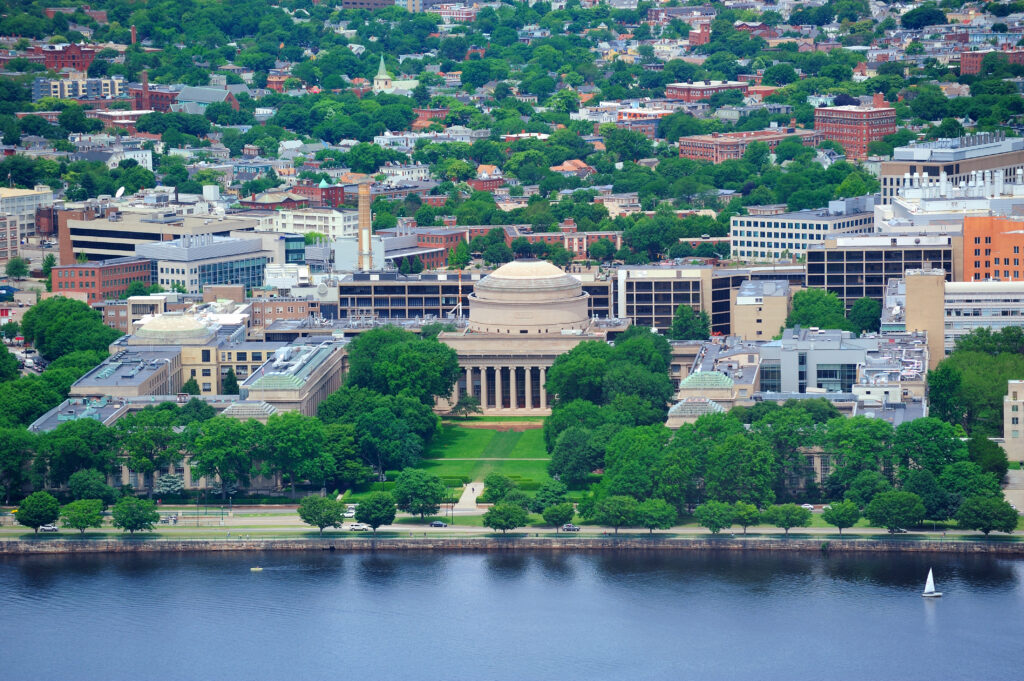
- At MIT, the Sustainable Stormwater and Landscape Ecology Plan set a campus-wide framework that we later put into practice at North Corridor, where a landscape filter bioretention system, a pilot strategy from that plan, replaced the gray infrastructure removed during construction of the MIT.nano building.
- At Harvard Business School, our 2012 Stormwater Master Plan, updated in 2016, has guided implementation on the Chao Center and Klarman Hall. HBS added about seven acres of impervious area on campus since 2012, and the school still reduced its stormwater discharge by 11% through the retrofits and design standards the plan called for.
- At UVA, the Meadow Creek Stormwater Management Master Plan led to three regional facilities built at The Dell, the Emmet Street Garage, and the John Paul Jones Arena. Individual building projects on the west side of campus now rely on these shared facilities.
The plans we’ve developed for these campuses have stayed useful for years, sometimes decades, because each one was built around real, near-term projects. A university gets a plan it can point to when a new building comes up, and a set of standards already vetted by the review process.
Respecting Natural Ecological and Landscape Resources
A campus is a living landscape long before it becomes a construction site, and we care as much about the natural resources as we do about what eventually gets built on top of them.
- At UVA, the Meadow Creek plan restored an 850-acre watershed by daylighting 1,200 linear feet of streambank and creating new wetlands and a feature pond, work that won a 2007 ACEC/MA Engineering Excellence Grand Conceptor Award. The Distillery Branch study applied the same thinking at a smaller scale, using hydrologic modeling to rank the green infrastructure retrofits that will do the most to relieve a stressed sub-watershed and support UVA’s MS4 permit requirements.
- At Princeton, our design for the Frick Chemistry Building restored the forest buffer along the Washington Road stream and removed two of the three stormwater outfalls that had been degrading it.
- MIT’s Landscape Ecology Plan tracks tree canopy, biodiversity, and urban heat island effects alongside stormwater volume, treating the campus landscape as a system the university can monitor and improve over time.
These projects show up as outcomes universities can point to: cleaner water reaching campus streams, streambanks that no longer erode, healthier tree canopy. A restored, functioning watershed also needs less ongoing maintenance than a degraded one, which matters to facilities budgets long after a project is built.
Integrated Stormwater Management
The best solutions rarely stop at a property line, so we look for ways to serve a whole campus, or an entire watershed, with a single thoughtful system.
- UVA’s regional approach means individual building projects on the west side of campus no longer need their own stormwater systems.
- Princeton’s East Campus Stormwater Facilities combine dispersed green infrastructure across a 22-acre site with a centralized detention system built beneath the new soccer stadium, sized to handle runoff from an additional eight acres of future development upstream.
- MIT’s Stormwater Toolkit and Basis of Design Matrix give every future campus project a shared set of strategies and performance targets to design toward.
- At Boston University, the stormwater systems built for the Center for Computing & Data Sciences Building also manage runoff for 28 adjacent properties.
Solving stormwater at the district or campus scale means these universities need fewer new systems as they build, and facilities teams have fewer separate systems to maintain over time.
Preserving Campus History
Some of the spaces we work on carry more weight than others, and we feel privileged when a university trusts us to help protect the history and memory a campus is built to hold.
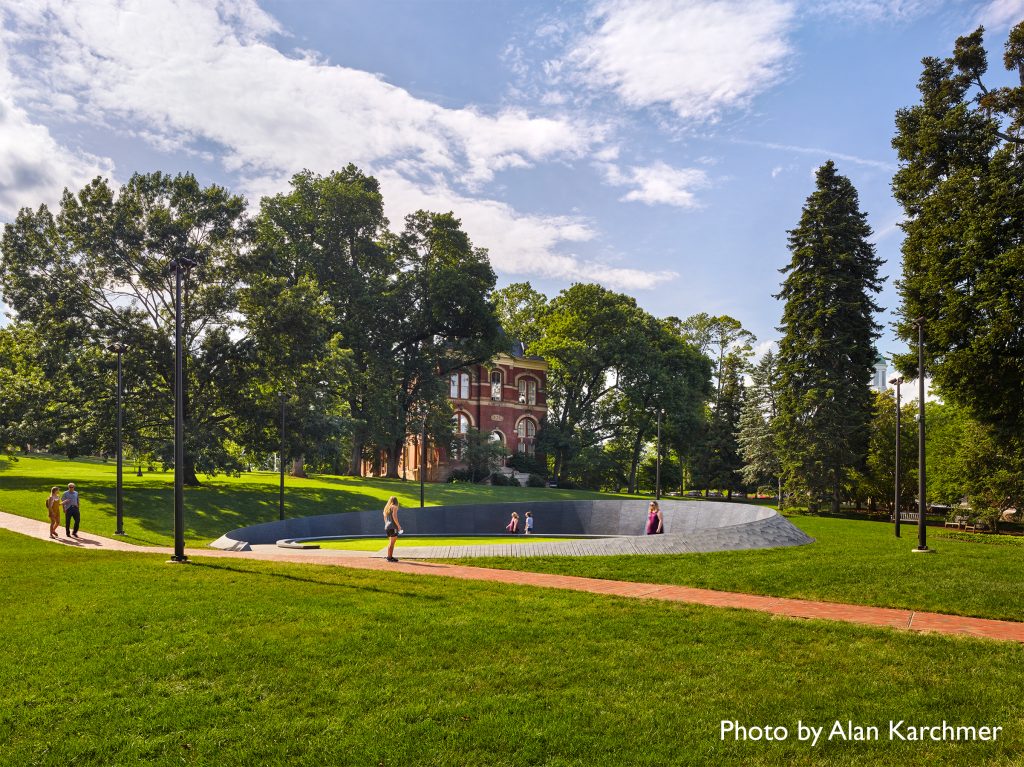
- At UVA’s East Range, a World Heritage Site and National Historic Landmark designed by Thomas Jefferson, we developed stormwater solutions that met the Secretary of the Interior’s standards for historic properties, addressing water damage that had affected 200-year-old buildings for years. The design was completed in time for the university’s 2019 Bicentennial. Nearby, we provided the drainage, water, and sewer infrastructure behind the Memorial to Enslaved Laborers, which honors the approximately 4,000 enslaved people who lived and worked at UVA between 1817 and 1865.
- At MIT, we handled utility mapping and relocation for the Sean Collier Memorial, honoring the MIT police officer killed in 2013 in the aftermath of the Boston Marathon bombing. That project won a 2019 AIA Innovation Award.
This kind of work asks for particular care. Stormwater and utility systems have to work, and they have to stay in the background, so that the history or memory a site is meant to hold stays the focus.
Tailored Solutions for Unique Campus Needs
Princeton, UVA, MIT, Harvard, and BU are five different campuses in three states, each with its own history and priorities. The relationships we have built at these universities have lasted because the work holds up after construction ends, and because our team stays available for whatever comes next: an updated master plan a decade later, or a single retrofit project.
If your institution is weighing a stormwater master plan, a historic preservation challenge, or site engineering for a new building, we’d welcome the chance to talk about how a long-term partnership could benefit your campus. Reach out to Gary Pease, PE, LEED AP, Vice President & Director of Client Services to learn more!