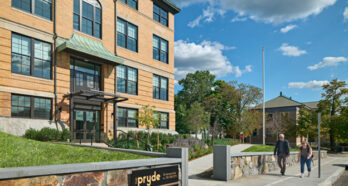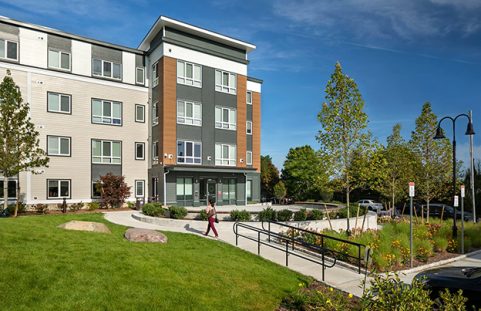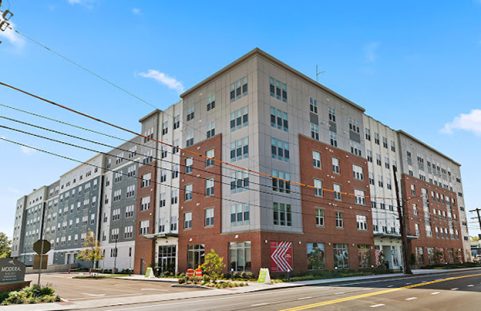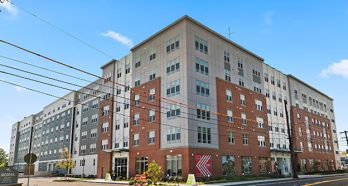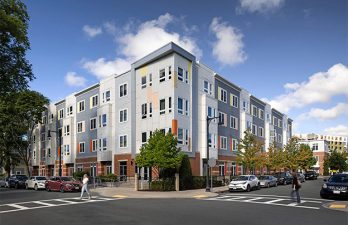
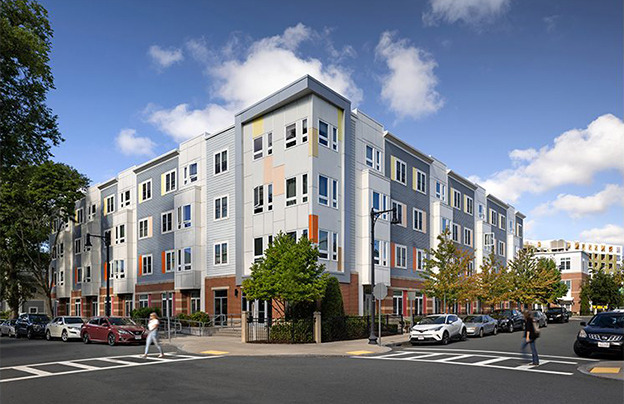
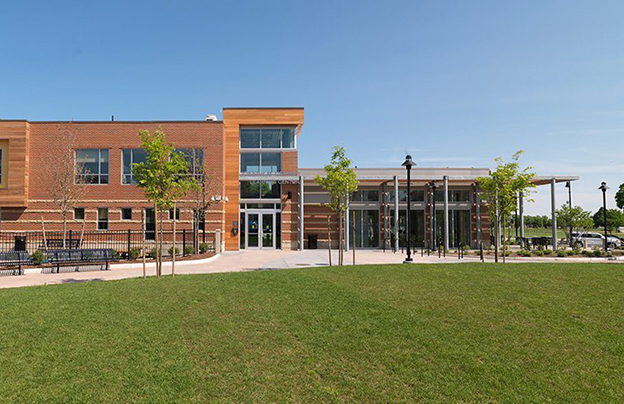
Originally built-in 1941, the 16-acre Old Colony housing development struggled with aged systems and infrastructure, and a very high annual energy and water cost of over $4,000 per unit. The redevelopment increased the number of apartments to 873, located in 22 three-story brick walk-up buildings near Andrews Square. The six-phased redevelopment included:
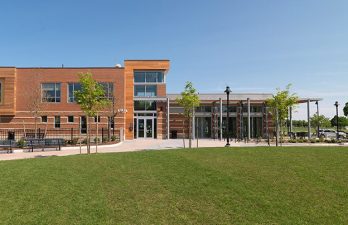
- Phase One: 116 new units of affordable housing and a new 10,000-square-foot community center (the Joseph M. Tierney Learning Center)
- Phase Two: 169 new units of affordable housing and five new public streets
- Phase Three: 305 new units in a multi-subphase redevelopment (3A, 3B, & 3C) including adjacent sidewalk improvements
- Phases Four and Five combined: 208 units with adjacent sidewalk improvements
- Phase Six: 89 units with adjacent sidewalk improvements
During Phase One, Nitsch served as an on-call consultant, assisting the project team with City of Boston Public Works permitting, and providing peer review services. During Phases Two through Six, we served as the Civil Engineer of Record, providing design and permitting services for the private development parcels and five new public streets. Our services included accessibility compliance, grading, utility support, project coordination, roadway infrastructure design, and cut and fill analysis. Nitsch also led the project team in obtaining Boston Water and Sewer Commission (BWSC) Site Plan Approval, Public Improvement Commission Approval, and Department of Environmental Protection (DEP) Sewer Compliance Approval.
The redevelopment was funded by approximately $80 million in grants including from the U.S. Department of Housing and Urban Development (HUD), as part of the American Recovery and Reinvestment Act (ARRA), to fund “green” public housing transformation projects across the country. The project integrated a wide range of sustainable elements, including light-colored walkways to reduce the heat-island effect, and stormwater management features such as pervious pavers, vegetated areas to green the site, and underground stormwater recharge systems that reduce the volume of water to the city system while treating for phosphorous. In fact, the sustainable measures allowed the project to achieve LEED ND Gold Certification for Phases One through Three and Passive House certification for Phases Four through Six.
Key Collaborators
Owner: Beacon Communities, LLC
Architect: The Architectural Team
Landscape Architect: Stantec
Construction Manager: Suffolk