
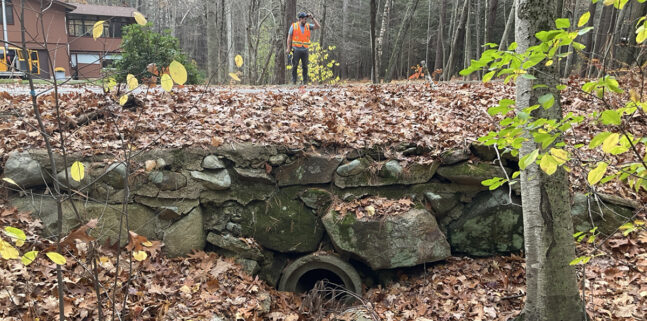
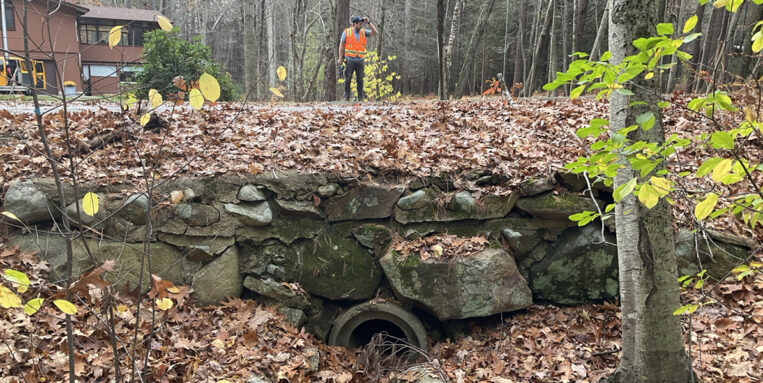
When a culvert becomes compromised, whether because it’s filling up with sediment or because the structure itself is failing, it can cause big problems for the road above. If the culvert is blocked, stormwater is given nowhere to go. It pools and erodes the embankment, which can lead to slumping and sinkholes. If the structure of the culvert fails, the whole road can collapse. A little routine maintenance goes a long way to keeping culverts, and the roads they support, in good condition. The Town of Carlisle engaged Nitsch Engineering to inspect every culvert in their records, describe their conditions, and make recommendations for future action.
Structural engineers from Nitsch first received a GIS map identifying all known culverts in Carlisle, then grouped those culverts by location so that they could efficiently visit every culvert on a series of several outings. A typical culvert inspection entails observation and measurement of all aspects of the culvert, including dimensions, conditions, and obstructions. Based on these observations, each culvert received a grade via rubric, and the culverts in worst condition with greatest potential impact were recommended for urgent repair or replacement.
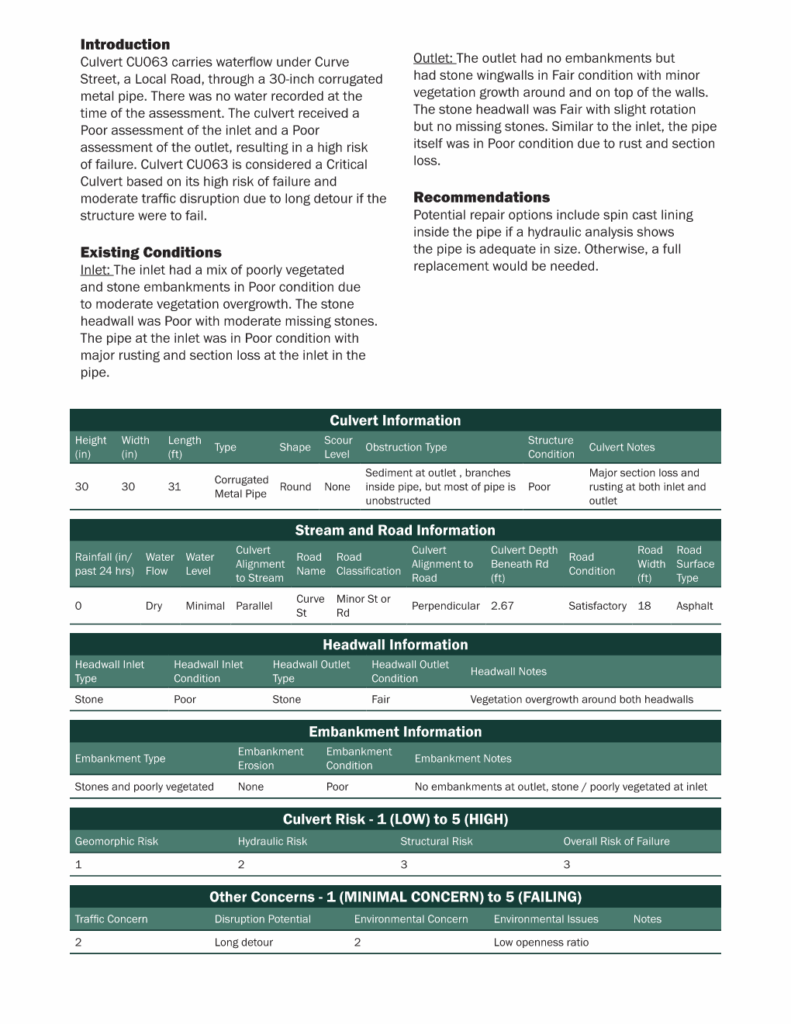


Having assessed the culverts, the structural team put together a 70-page document for the Town detailing their process, criteria, findings, and recommendations moving forward. Recommendations prioritize regular repairs, except for high priority culvert at risk of failure. Twelve culverts were determined to be at high risk of failure, and of those we recommended that four culverts be replaced within the next five years. These four culverts were chosen because they were in extremely poor condition and their failure would mean the forced closure of a road that would not be easily replaced, i.e. high-use roads and dead-end roads. The other high-risk culverts ought to be repaired or replaced, but are less urgent due to the road situations around them.


Nitsch’s recommendation for all other culverts was a combination of repair and cleaning. Most culverts’ poor condition could be substantially improved by simply removing rocks, mud, leaves, and other debris, either manually or with the use of a water jet. Nitsch provided cost estimates for various approaches to repair and cleaning depending on the condition of a given culvert, as well as collated relevant grant information for the Town’s use.
With information and recommendations from Nitsch, the Town of Carlisle is better prepared to keep their critical infrastructure in workable condition.
Wondering if a similar assessment might help your community? Contact Director of Structural Engineering Nathan Rosencranz here!