

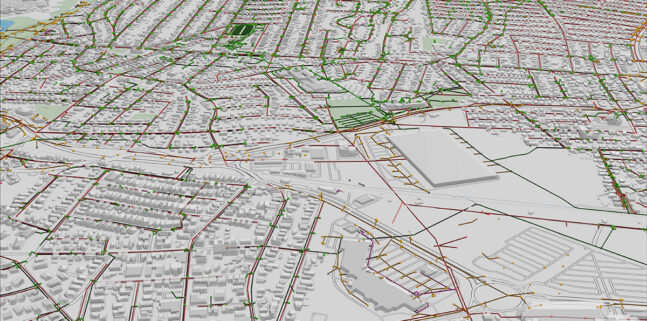

Municipal infrastructure systems are under increasing pressure. Aging assets, expanding regulatory requirements, and rising service demands are increasingly putting pressure on limited municipal staff capacity and constrained budgets. When you factor in escalating weather risks and increasing emergency response demands, one thing becomes clear: municipalities need more than individual asset projects. They need systems that support daily decision‑making, include primary data source collection, and are accessible to boards, staff, and the public.
That is where modern asset management makes a difference.
Asset Management Is About Decisions, Not Software
Asset management is often mistaken for a database or a software purchase. In practice, its value lies in decision support.
A well-structured asset management system helps municipalities understand what assets they own, where they are, how they are performing, and what happens if they fail. It connects daily operations (inspections, preventative maintenance, emergency repairs, and work orders) with long-term planning, capital programming, and funding strategies.
The goal is not necessarily error-free datasets. It is usable, reliable information that supports real world decisions and improves over time.
For DPW directors and municipal utility staff, the questions are practical and urgent:
- Where are we most likely to have the next main break, lift station failure, or flooding risk?
- Which assets are critical to service continuity and public safety—and which can wait?
- How do we meet MS4 and other permit obligations with the staff we have?
- How do we coordinate pavement, water, sewer, and drainage work to avoid repeat excavations?
- How do we prove the need quickly for grants, audits, and annual budget discussions?
Asset management provides a defensible way to answer those questions with consistent, shared information.
Expanding the Definition of “Assets”
Most municipalities already track roads, pipes, and facilities. But many other assets drive workload, compliance risk, and community experience while remaining inconsistently documented.
Catch basins, outfalls, culverts, green infrastructure, manholes, safety equipment, lighting, signage, paths, and even high-maintenance landscape features collectively affect safety, O&M cost, regulatory compliance, and public perception.
When multiple asset types exist in the same corridor, lack of coordination often leads to repeat construction, missed efficiencies, and avoidable disruption. Asset management helps make these relationships visible before projects are scoped and budgets are committed.
Why Location Changes Everything
Location is the common thread that ties asset management together.
By anchoring assets to accurate geographic locations, municipalities gain context that spreadsheets cannot provide. Mapping assets reveals patterns such as condition clusters, risk concentrations, overlapping infrastructure, and upstream or downstream impacts. This information is especially valuable for drainage systems, flooding hotspots, and neighborhood-level service reliability.
This spatial awareness helps staff answer practical questions quickly:
- What assets are affected by this project?
- What else should be addressed while we are already in the ground?
- Where can we coordinate work to reduce cost, traffic impacts, and disruption?
Importantly, a geospatial asset management system does not replace existing tracking and monitoring systems. It connects engineering, financial, and maintenance records back to the same mapped assets, creating shared visibility across departments and supporting improved handoffs between office and field.
One Dataset, Many Users
Different roles need different perspectives. Field crews focus on materials, access, and condition. Engineers focus on constraints, conflicts, and standards. Planners focus on coverage and equity. Administrators focus on prioritization and funding.
A shared asset dataset allows each group to view the same infrastructure through a role-appropriate lens, without redefining the asset. The result is less confusion, fewer duplicate records, and greater confidence that everyone is working from the same information.
Start Simple. Improve Continuously.
Successful asset management efforts start small:
- Capture core attributes like location, asset type, and unique ID
- Add condition photos during inspections
- Track criticality and failure exposure for high-consequence assets increasing system resilience
- Expand attributes only when they inform decisions or reporting
Supporting Smarter Capital Planning
When asset data is reliable and accessible, capital planning becomes clearer and more defensible. Municipalities can move to:
- Identify efficiencies across asset types (roadway, water, drainage, accessibility)
- Align short-term maintenance with long-term replacement cycles
- Prioritize preventative work where risks are highest
- Improve grant readiness by clearly documenting condition, need, and public benefit
- Communicate priorities transparently to leadership, finance, regulators, and the community
Over time, capital planning becomes a repeatable process rather than a reaction to the next failure.
What Success Really Looks Like
Success is not perfect data. It shows up in daily operations:
- Fewer unexpected failures and unanticipated excavations
- Data-informed decision making at the job site by field crews utilizing real-time updates from office staff
- Consistent reporting without manual rework for grants, permits, and budgets
When work orders reference existing asset IDs, when standardized reports come directly from live datasets, and when supervisors can observe trends across asset types and neighborhoods, asset management is delivering real value.
Moving Forward
Asset management is not a one-time project, it is an ongoing process. Small, consistent updates prevent major rebuilds and allow systems to evolve as needs change.
By focusing on structure, ownership, and usability, municipalities can build asset management systems that support today’s operations while preparing for tomorrow’s challenges.
The result? Infrastructure that is not only better documented, but better managed and supports safer, more resilient communities over the long term.
Learn More
Want to see what this looks like in practice, and how an updated asset management system can help your municipality plan for the future?
Sign up for our webinar on April 16, 1-2 p.m. to learn more and see current examples, learn how municipalities are connecting GIS to work orders and capital planning, and hear practical steps for improving data confidence over time. Or reach out directly to Brian Creamer, AICP, SITES AP, Director of Resilience Planning and Design!