
Universities manage extensive networks of critical infrastructure, including steam, water, sewer, stormwater, electric, and gas utilities. Effective management isn’t just about preventing failures; it’s essential for practical planning, compliance, financial stewardship, and day‑to‑day operations. At Nitsch Engineering, we’ve built workflows that blend surveying, CAD, and GIS into an integrated asset management system so utility data remains accurate, traceable, and usable across departments. This approach has helped institutions like Tufts University, MIT, and Williams College simplify complex asset management and make smarter decisions faster.
A Practical Foundation for Linear Assets
At Tufts, managing linear assets starts on the ground. Our survey teams collect reliable field data so utilities are precisely mapped and continuously updated in AutoCAD Civil 3D. We use Civil 3D pipe networks to manage physical attributes (e.g., elevations, pipe diameters, materials). When some details aren’t available, we coordinate with campus staff to establish vetted default values, thereby maintaining consistency without guesswork. Additional information (e.g., installation dates, condition, as‑built references) is stored in standardized spreadsheets and linked to CAD assets via unique IDs. Each update is delivered as an organized package with CAD drawings, utility spreadsheets, and structured as‑built records—ready for immediate internal use.
Using GIS to Keep Data Live and Accessible
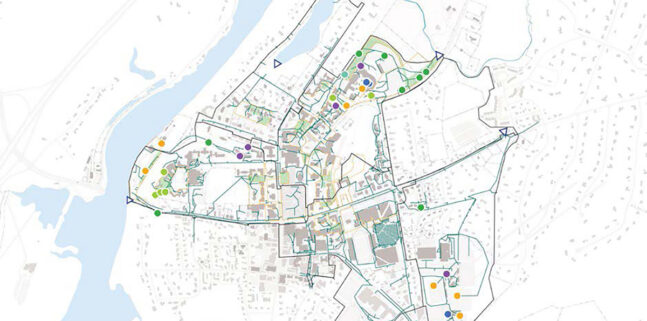
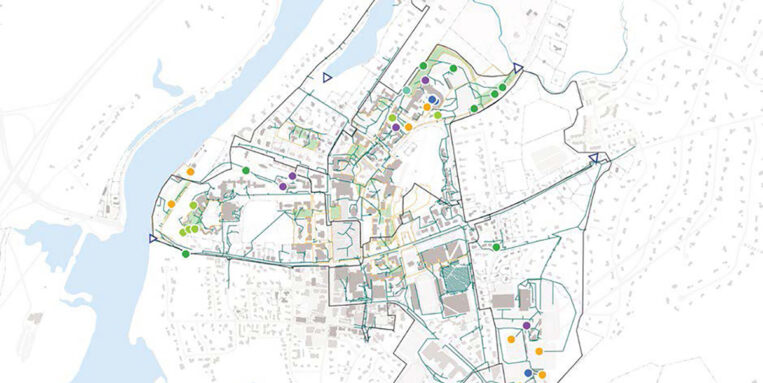
Converting CAD to GIS unlocks dynamic, campus‑wide insight. For Williams College, we expanded on our established workflow by transforming utility CAD drawings into GIS format. This provides the college with immediate visual insights, advanced spatial analysis capabilities, and improved accessibility for ongoing asset management.
At MIT, our campus‑wide stormwater inlet condition assessment highlighted how quickly GIS can make field data actionable. Our team collected GPS-located assessments using ArcGIS Field Maps, automatically updating an interactive online application—giving facilities staff real‑time visibility that allows them to make faster maintenance decisions.
To make this practical for everyday users, we leverage ArcGIS Online for one‑stop data sharing, tight integration with ArcGIS Pro/Civil 3D, real‑time project updates, and a user‑friendly interface for non‑GIS stakeholders. In the field, Eos Arrow Gold+ GNSS receivers provide centimeter‑level accuracy and push data directly into our GIS environment, reducing manual entry and errors.
We also host and provide regular updates to layers, dashboards, and StoryMaps, which enable photo attachments, and support in‑app editing—so your asset inventory stays current as staff members work.
Beyond Traditional Methods: BIM and Digital Twins
Traditional CAD methods, like pipe networks, deliver 2D or basic 3D drawings for planning and record‑keeping. Building Information Modeling (BIM) takes this a step further by embedding data about the materials, condition, history, and asset metadata—making it easier for facilities teams to understand and maintain their assets over time.
Digital twins build on the idea of BIM by creating digital replicas of physical assets that update in real-time, using sensors and other data sources. They offer ongoing visibility into asset performance, condition, and even future needs, allowing facilities managers to predict problems before they happen.
Currently, ArcGIS Pro 3.4 can directly integrate BIM models, enabling teams to visualize detailed asset information alongside GIS and CAD data. Although many institutions still primarily use Civil 3D for managing their utilities, considering BIM and digital twins in combination with ArcGIS Pro offers a clear pathway towards improved maintenance planning, quicker decision-making, and more reliable asset management overall.
The Practical Benefits of Integrated Asset Management
Effective asset management provides tangible advantages:
- Better Planning: Accurate, real-time data supports proactive decision‑making instead of reactive emergency work.
- Reduced Costs: Preventive maintenance based on reliable data extends asset lifespans and reduces costly emergency repairs.
- Compliance Simplified: Clear documentation facilitates easier regulatory compliance and reduces risks associated with audits.
- Efficient Operations: Mobile GIS tools streamline field‑to‑office communication, shortening response times and simplifying day-to-day management.
- Reliable Data: Integrated survey‑CAD‑GIS workflows reduces the risk of data loss and ensure continuity as teams change.
These benefits align with our broader facilities optimization and capital planning goals—centralizing data, improving workflow, supporting work orders, and enabling lifecycle monitoring and budgeting decisions.
Funding & Financing: Connect Asset Data to Capital Strategy
We help campuses link asset management with funding pathways—New construction & renovations, capital renewal, ESAs/PPAs, IRA “Direct Pay” (Elective Pay) for tax‑exempt institutions, public‑private partnerships, grants, and operating budgets—as well as federal and state programs like IIJA, EPA SRF/WIFIA, DOE Grid Resilience Formula Grants, and resilience grants. Aligning a credible linear asset inventory with these opportunities can reduce risk premiums and accelerate modernization and decarbonization.
Why Institutions Should Prioritize Integrated Asset Management
Institutions managing extensive utility networks gain significant value from integrated asset management. Instead of fragmented data and scattered documentation, adopting coordinated survey, CAD, GIS, and modern technologies creates efficiencies and cost savings. With clear asset visibility and reliable documentation, facilities teams can make fast, practical, and defensible decisions.
Keep the Conversation Going
Want to know more?
Contact Brian Creamer, AICP, SITES AP, Director of Resilience Planning and Design to learn more about how we can help on your or your client’s campus.