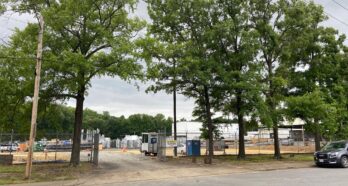
Moakley Park is a vital recreational and social hub for South Boston, offering sports fields, playgrounds, and gathering spaces. Because of its waterfront location and low-lying flat terrain, the 60-acre park frequently floods, presenting a unique opportunity to integrate green stormwater infrastructure that can serve as a model for climate resilience. The new Moakley Park will enhance opportunities for recreation and neighborhood connection while protecting the community from flooding and climate impacts such as sea level rise, storm surge, and increased storm intensities.
Since 2018, Nitsch has worked on four phases of the project, collaborating with many team members to envision a new Moakley Park – and then bring that vision to life.
Vision Plan (2018–2019)
Working with the Boston Parks and Recreation Department (BPRD) and the City of Boston Environment Department, Nitsch supported the creation of a long-term strategy for park improvements, focusing on recreation and community functions, multi-modal circulation, and climate protection. Integrated stormwater solutions, including porous pavement, wetlands, and swales, were designed to store over five million cubic feet of water. Nitsch supported the stormwater management and green infrastructure design, and evaluated infrastructure around the park, including significant underground utilities. We also acted as a technical liaison between City of Boston departments and supported community outreach efforts by providing technical expertise during public meetings.
Preliminary Resilience Plan (2019–2020)
With Massachusetts Municipal Vulnerability Preparedness (MVP) grant funding, Nitsch provided land surveying, traffic and permitting analysis, and advanced green infrastructure design to advance the design of the park. Our traffic analysis assessed the impacts of proposed mitigation strategies and the closure of Day Boulevard. Nitsch advanced the park’s stormwater management design, including innovative green infrastructure strategies such as stormwater meadows, corridors, tree trenches, and porous pavement. We created a model to evaluate stormwater management and flooding risks, under current and future rainfall and tidal conditions.
As the project advanced to the Preliminary Stormwater Design Phase, we focused on conceptual sizing and the benefits of stormwater strategies. Nitsch worked closely with the Boston Water and Sewer Commission (BWSC) and Massachusetts Water Resources Authority (MWRA) to understand the complex drainage system surrounding Moakley Park. The analysis recommended solutions for flood resilience under current and projected 2070 conditions and ensured compliance with local and state stormwater regulations set by the City of Boston, BWSC, and Massachusetts Department of Environmental Protection (MassDEP).
To achieve these goals, Nitsch developed designs incorporating underground storage and green infrastructure to manage, filter, and detain stormwater runoff before discharge. A technical memorandum summarized these recommendations, including phasing considerations, continued coordination with BWSC, and opportunities to enhance stormwater capacity for neighborhood-scale resilience as the project transitioned into Schematic Design.
Schematic Design (2021–2022)
During this phase, Nitsch refined the park-wide stormwater management approach, collaborating with city agencies and consultants. The green infrastructure strategies were refined to mimic natural cycles, promote balanced ecosystems, and manage water as a resource. Landscape-based solutions, such as stormwater meadows and wetlands, were evaluated alongside options like permeable pavement for pathways and gathering spaces.
In concert with the proposed green infrastructure, underground systems were proposed to mitigate peak runoff rates and reduce the vulnerability to flooding within the Park during high tide conditions. Nitsch performed additional modeling to analyze the storage required to hold/detain the current 100-year storm volumes and design the conveyance system to the discharge to the BWSC-owned Morrissey Boulevard Stormwater Outfall south of the park.
Phase A Design Development (2022–Present)
Nitsch provided stormwater and green infrastructure design and civil engineering services associated with Phase A, which encompasses the northern portion of the Park and includes the Operations and Maintenance Building, the premier baseball field, and the flood management barrier.
The proposed stormwater and green infrastructure facilities in this area included the subsurface detention system below the baseball field, coastal stormwater wetland on the eastern side of the berm, a bioretention basin adjacent to the Operations and Maintenance Building, the tree filter and porous pavement system within the urban edge, and other smaller areas along the pathways. Building on the schematic design, Nitsch refined the stormwater and green infrastructure approaches to mimic natural cycles and promote a self-sustaining, balanced, and healthy ecosystem. We are working closely with the project team, the BPRD, BWSC, and MWRA to continue developing stormwater strategies to address existing conditions, site opportunities, current and future stormwater demands, adjacencies, and stormwater sustainability initiatives.
Nitsch is currently supporting the Massachusetts Environmental Policy Act (MEPA) permitting process.
Key Collaborators
Owner: Boston Parks & Recreation Department
Designers: Stoss Landscape Urbanism + Weston & Sampson
Coastal Engineers: Woods Hole Group